[Case 02]
North Star Dance Theatre Website Build and Marketing Insights
Dance
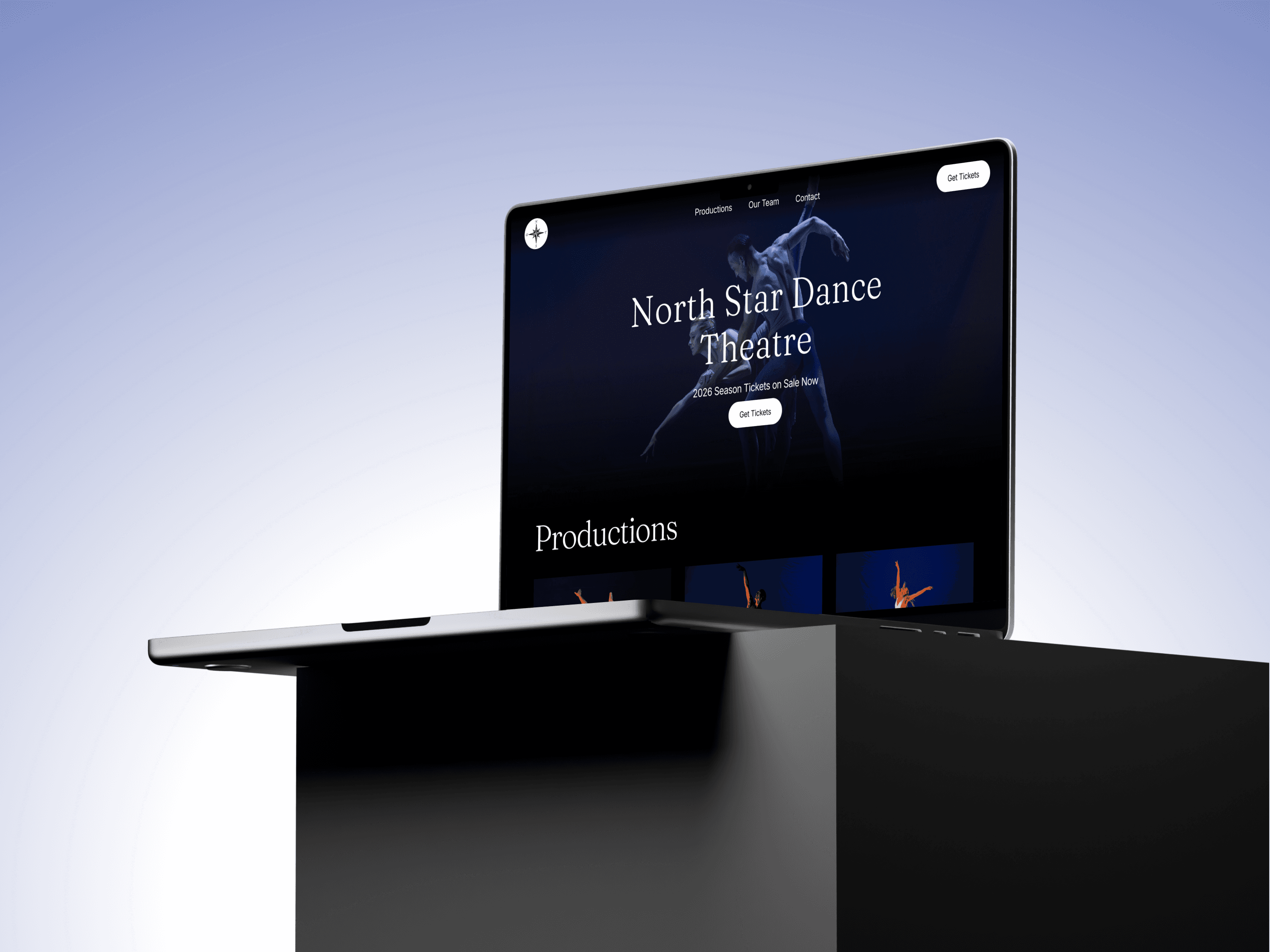
The First Website to Sell a Season
North Star Dance Theatre
[Background]
North Star had no online presence beyond social media, and its tickets were scattered across two platforms — ThunderTix for the Dusk shows and the Barrymore box office for Dawn — with no single, credible place tying it all together.
[Project Overview]
North Star Dance Theatre is a new Madison-based contemporary ballet company. I designed and built their first site on Framer giving them a credible online home and one clear place to buy tickets for their 2026 season — built in about two and a half weeks.
[Industry]
Dance
[My Role]
Solo UX Designer & Marketing Analyst
[Platforms]
Framer
[Timeline]
May 15 - September 4
[Results]
Since launch the site has drawn roughly 3,700 visitors, with an average session over three minutes. The Get Tickets page pulled 847 views on its own — and since that page exists only to route people to buy, it's a strong proxy for buying intent. Visits were also mobile-first by a wide margin, about 2,900 mobile to 790 desktop, so the mobile layout was the main experience rather than a secondary one.
[Research]
Before designing, I audited six local and national dance companies to learn what a dance audience expects from a site.
1
Details that help people plan
Runtime estimates and age recommendations were common on the sites I reviewed, which let audiences plan their evening and help parents decide.
2
Reassurance before arrival
A "know before you go" section with parking, accessibility, and ticket prep information removed uncertainty for people who like to come prepared.
3
Structure signals credibility
Clear navigation and a consistent visual tone were the shared markers of a trustworthy dance site, and shaped how I organized North Star's pages.
[Design Highlights]
Tickets were sold through two separate systems: ThunderTix for both Dusk shows, and the Barrymore Theater's own box office for Dawn — which had two more separate links for its two dates.
The scattered ticketing created a real problem: the general "Get Tickets" button in the nav and footer only reached ThunderTix, so there was no way to buy Dawn tickets from the site's main call to action.
So I built a dedicated Get Tickets page that gathers every show's links in one place, each show as its own clear block with its dates and a direct link to the right platform. The global button now points here, so the primary call to action works for the entire season.

One show block, which repeats for all four show links
[Marketing]

I wrote the metadata around local and seasonal search, so people looking for current shows would find the site over older cached results. Google Search brought in about 28% of traffic — strong for a brand-new site — while the company's existing Facebook and Instagram following drove most of the rest.
I built UTM links for the company's channels so their social posts and campaigns were tagged and traceable. That allows us to track where users are coming from, whether Google search, social media, or print ads.
[Collaboration]
I ran daily check-ins with my boss and gathered feedback from several people at North Star, then folded it into the work without losing momentum or direction. Because he brought me on as the designer and asked for my judgment rather than handing down orders, I also had to hold my own point of view — making the case for design decisions and knowing when to adapt. It's where I learned to be the design voice in the room, not just the person executing
[Takeaways]
Define the goal
With a vague brief, I learned to define the goal myself — deciding what the site needed to be and what to build first, rather than waiting to be told.
Building from scratch
Without existing site, systems, or data, I got comfortable building from scratch and teaching myself the tools as I went, instead of stalling on what I didn't yet know.
The design voice
Staying in step with my boss on scope, brand, and analytics taught me how to fold feedback and shared decisions into the work while still keeping it moving toward a shipped result.
For next season
This year the website and company were still new and didn't have tracking implemented before launch. Next season it goes in pre-season, so we can measure the site's real impact on sales.